
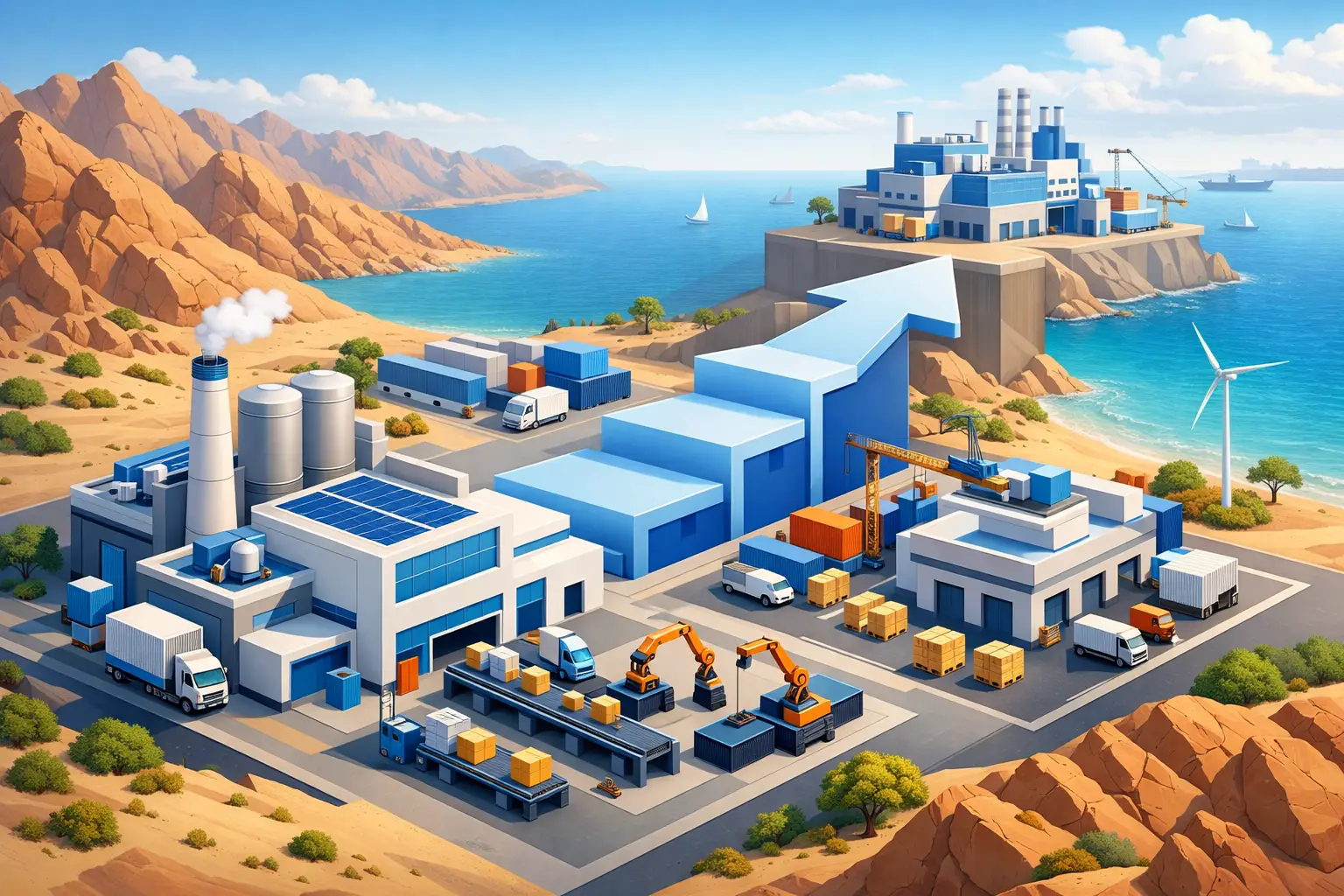
A factory decision is rarely about one building. It is about whether your next production base can hold cost discipline, regulatory clarity, export efficiency, workforce stability, and future expansion in the same frame. That is why Ras Al Khaimah factory setup is gaining serious attention from industrial investors and advanced manufacturers that are no longer willing to trade scale for speed, or infrastructure for affordability.
For companies in electric mobility, renewable energy, aerospace-adjacent production, semiconductors, and high-value engineered goods, the question is no longer whether the UAE can support industrial growth. The real question is where within the UAE a manufacturer can build a long-term operating advantage. Ras Al Khaimah stands out because it offers a different equation: lower occupancy and operating costs than more saturated markets, direct access to ports and regional trade lanes, and room to develop industrial ecosystems instead of isolated units.
Why Ras Al Khaimah factory setup is moving up the list
Some manufacturing locations look attractive in a boardroom presentation but become operationally expensive once utilities, logistics, labor housing, and expansion constraints appear. Ras Al Khaimah has become more relevant because it addresses those issues earlier in the site-selection process.
The emirate offers industrial land and built facilities at a cost base that can materially improve total operating economics. For a manufacturer planning a multi-phase investment, that difference matters more than a headline lease rate. It shapes plant layout, warehousing strategy, inventory buffers, worker accommodation planning, and the feasibility of adding new lines without relocating the business two years later.
Location also matters in a more practical sense than many market overviews admit. Ras Al Khaimah gives manufacturers access to the UAE market, the wider GCC, East Africa, South Asia, and global shipping routes through established logistics corridors. If your supply chain depends on importing components and exporting finished or semi-finished goods, proximity to ports and transport infrastructure is not a secondary benefit. It is part of the operating model.
There is also a policy and business environment advantage. Investors evaluating a Ras Al Khaimah factory setup are often looking for regulatory predictability and a more efficient path to establishing operations. The appeal is not only speed of incorporation or licensing. It is the ability to align land, utilities, production requirements, warehousing, and compliance under a structure that supports industrial activity rather than treating it as an afterthought.
What investors should evaluate before committing
The strongest factory setups are designed backward from the production model, not forward from a plot map. A battery component manufacturer has very different needs from a food processor or a precision electronics assembler. Yet many expansions fail at the same point: companies choose space before defining process requirements.
Power load is one obvious example. If your operation involves energy-intensive machinery, thermal processes, clean manufacturing requirements, or future automation upgrades, utility planning must happen at the beginning. The same applies to water demand, ventilation, waste handling, and specialized compliance conditions. A lower-cost site can become a more expensive decision if retrofits are required after commissioning.
Scalability deserves equal scrutiny. Many manufacturers enter a new market with one production line and a conservative output target. If demand accelerates, they then discover that truck flow is constrained, storage is undersized, or adjacent expansion land is unavailable. A serious industrial platform should allow for phased growth without forcing the operator into a second relocation or fragmented footprint.
Workforce planning is another area where it depends on the business model. Some operations can function with a lean technical team and a high degree of automation. Others need a larger workforce, specialist engineers, quality assurance staff, and service partners nearby. In those cases, an isolated industrial site creates friction. The more advanced the operation, the more valuable an ecosystem becomes – one that supports housing, services, training, health access, and retention.
Built-to-suit versus ready industrial units
This is where strategy matters more than preference. A built-to-suit facility offers the best operational fit when production flows are complex, ceiling heights are non-standard, environmental controls are strict, or the company expects to install specialized lines from day one. It gives the manufacturer tighter control over process design, compliance, material movement, and future capacity planning.
But built-to-suit is not always the right first move. For businesses entering the region with a staged market-entry plan, ready industrial units or modular facilities may offer a better risk balance. They reduce time to launch, lower upfront capital exposure, and make it easier to validate customer demand before committing to a larger custom plant.
The right choice depends on product type, market certainty, and capital strategy. If time-to-revenue is critical, a modular or pre-developed factory solution may outperform a fully custom build. If precision, compliance, and process efficiency drive profitability, built-to-suit becomes far more compelling.
The rise of sector-specific industrial ecosystems
Manufacturing is moving away from the old industrial park model where any operator can take any shed and make it work. Advanced industry needs more coordination than that. EV components, hydrogen mobility systems, semiconductor-related production, energy equipment, and aerospace-adjacent assembly each depend on a different mix of utilities, compliance standards, logistics support, and technical services.
That is why the most competitive Ras Al Khaimah factory setup strategies are increasingly tied to sector-oriented infrastructure. Cleanroom-ready spaces, high-spec utility planning, testing support, integrated logistics, and room for R&D functions are no longer fringe requirements. They are becoming standard for companies building long-term industrial positions in the region.
This is also where ecosystem design changes the economics. A manufacturer does not only benefit from its own facility. It benefits from neighboring suppliers, service providers, testing capabilities, logistics operators, and a workforce base that understands industrial discipline. The closer these elements are to one another, the lower the friction in day-to-day execution.
Rana Group has built its industrial proposition around this reality, developing an ecosystem model rather than a conventional real estate offering. For investors and occupiers, that distinction matters because advanced manufacturing performs best in environments built for industrial continuity, not just land absorption.
Cost advantage is real, but only if the platform is future-ready
It is tempting to frame Ras Al Khaimah only as a lower-cost option. That would undersell the case. Low cost without infrastructure depth usually creates hidden expense later. The better view is that the emirate offers a more efficient base for companies that want both capital discipline and strategic reach.
A future-ready platform means more than roads and utility hookups. It means planning for automation, ESG compliance, modern warehousing, worker support services, and expansion over a ten- to fifteen-year horizon. It means understanding that industrial occupiers now evaluate carbon implications, supply chain resilience, and talent retention with the same seriousness they apply to rent and transport costs.
For clean-tech and advanced technology firms, this is especially important. Institutional capital, strategic partners, and global customers increasingly expect manufacturing platforms to reflect sustainability alignment and operational credibility. A site that can support cleaner production, responsible resource use, and integrated community planning carries real strategic value.
What makes a setup durable over the next decade
The next decade will reward manufacturers that choose locations capable of adapting to changing technology, trade routes, and production standards. Durability comes from optionality. Can the site support automation upgrades? Can adjacent land or facilities absorb growth? Can logistics keep pace with larger throughput? Can the workforce ecosystem mature with the business?
This is where Ras Al Khaimah has a meaningful advantage for long-term planners. It offers room to think beyond immediate commissioning. That makes it relevant not only for first-entry manufacturers but also for companies reorganizing regional production around resilience, cost control, and export flexibility.
A durable setup also depends on the operating environment around the factory gates. Industrial businesses perform better when employees can live well, when technical talent can be retained, and when support functions do not need to be built from scratch. The more complete the surrounding ecosystem, the more stable the operation becomes.
Making the right factory decision
A strong Ras Al Khaimah factory setup is not defined by how quickly a lease is signed. It is defined by how effectively the site supports production, compliance, workforce needs, and expansion three, five, and ten years from now. That requires a sharper level of planning than many industrial expansions receive.
For decision-makers, the most useful approach is to evaluate the full operating equation at once: facility type, utility readiness, logistics performance, sector fit, ESG alignment, and the broader ecosystem that will support both leadership and labor. When those pieces are aligned, Ras Al Khaimah becomes more than a cost-efficient location. It becomes a platform for industrial growth with regional and global reach.
The manufacturers that will lead the next wave of industrial value creation in the Middle East are not choosing space. They are choosing operating environments built for scale, resilience, and relevance. That is the standard worth applying before the first machine is ever installed.
