
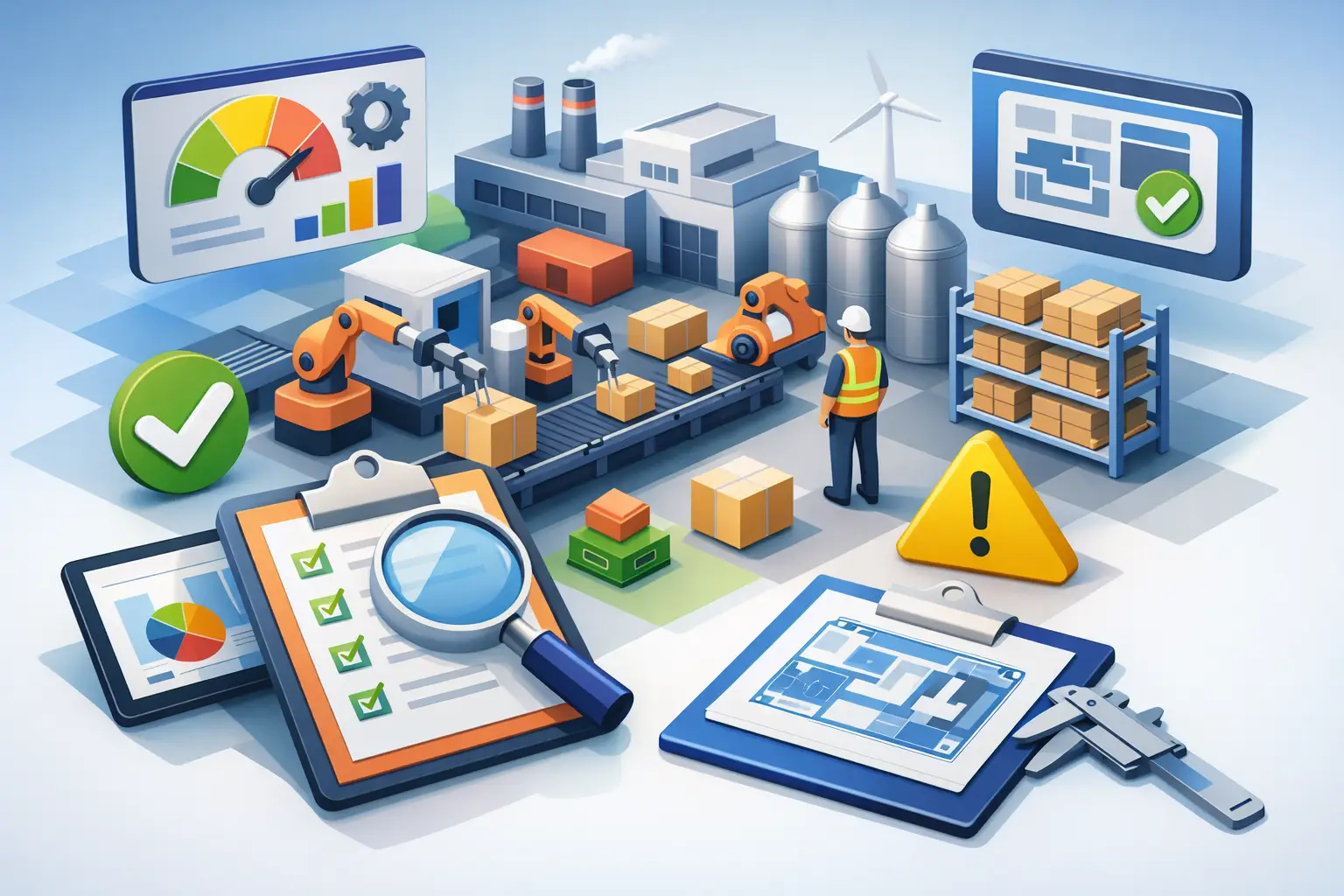
A manufacturing site can look compelling on paper and still slow your program by 18 months. The land is available. The lease terms are attractive. The market access is strong. Then the real questions start – can the site support your utility loads, your compliance obligations, your staffing model, and your expansion path without forcing redesign, delay, or cost creep?
That is the real issue behind how to evaluate manufacturing site readiness. It is not a branding exercise or a box-ticking inspection. For investors, operators, and expansion teams, site readiness is a direct predictor of speed to market, capital efficiency, operational resilience, and long-term competitiveness.
What manufacturing site readiness actually means
A ready site is not simply a parcel with zoning and road access. Readiness means the location can support your production model with minimal uncertainty across infrastructure, approvals, workforce access, logistics, and future scaling. The closer your operation is to advanced manufacturing – semiconductors, EV components, hydrogen systems, aerospace assemblies, energy technology – the less room there is for ambiguity.
This is why two sites with similar acreage can have very different strategic value. One may be technically available but require major upgrades to power quality, wastewater treatment, cleanroom adaptation, or transport connectivity. The other may already be aligned with industrial use, supported by nearby logistics assets, and designed around the realities of high-spec manufacturing. The difference is measured in months, capex, and execution risk.
Start with the production model, not the property brochure
The first mistake many companies make is evaluating a site before they fully define what the facility must do. A site is only “ready” relative to the operation it is expected to support.
A light assembly plant has different requirements than a gigafactory supplier, a precision electronics line, or a hydrogen mobility component facility. Your team should begin with a clear operating profile: power demand, water consumption, HVAC requirements, ceiling height, floor loading, hazardous material handling, cleanroom needs, inbound and outbound freight profile, headcount structure, and automation level.
Without that baseline, site selection turns into guesswork. With it, readiness becomes measurable.
How to evaluate manufacturing site readiness across core systems
The most reliable way to assess readiness is to test the site against the systems that determine whether production can start, stabilize, and scale.
Utilities are the first gate
Power availability matters, but power quality matters just as much. Manufacturers often ask whether sufficient megawatts can be delivered, but they should also ask about redundancy, outage history, grid stability, substation proximity, and the timeline for capacity upgrades. For advanced production, inconsistent power can be as disruptive as inadequate power.
Water and wastewater are equally important. Some processes need high-purity water, specialized discharge treatment, or predictable supply at industrial volumes. Gas, telecom, and data infrastructure should be assessed with the same rigor. If the site requires major utility extensions, the question is not whether that can be done. The question is who pays, how long it takes, and what that does to your launch schedule.
Permitting and regulatory path should be visible early
A site is not ready if the approval process is uncertain. Expansion leaders should understand current zoning, environmental constraints, building permit timelines, fire and safety requirements, and any sector-specific compliance issues tied to chemicals, emissions, or export controls.
This is where many projects lose momentum. The land may be industrial, but the intended use may still trigger lengthy review. Regulatory clarity is a strategic asset because it reduces schedule risk and improves capex forecasting. Investor-friendly jurisdictions are not simply those with low costs. They are the ones where the approval path is transparent and realistic.
Logistics readiness is about network fit, not map proximity
A site near a port or highway is not automatically logistics-ready. The real question is whether the logistics network fits your supply chain cadence. Evaluate trucking access, congestion patterns, border efficiency where relevant, port performance, air freight options for high-value goods, and the reliability of inbound raw material flows.
For multinational manufacturers, logistics readiness also includes customs processes, regional distribution reach, and the ability to serve both local and export markets from one base. A location that cuts transit time but increases handoff complexity may not improve the total network.
Workforce readiness goes beyond labor availability
Too many site evaluations stop at wage rates and local population size. That is an incomplete view. Readiness depends on whether the location can support the skill mix your facility needs now and later.
Assess technician availability, engineering depth, vocational training pathways, management talent, and the attractiveness of the surrounding environment for mobile skilled labor. If your operation depends on specialists, then housing, healthcare, schools, transport, and quality of life stop being secondary issues. They become operating conditions. A manufacturing base that cannot attract and retain talent will eventually limit throughput, quality, and expansion.
Building and land configuration must match the process
Some operations can adapt to a standard industrial shell. Others cannot. Clear spans, vibration tolerance, cleanroom adaptation, dock ratios, circulation space, hazardous storage allowances, and room for process flow all matter. Even before construction begins, teams should evaluate whether the site geometry supports efficient manufacturing.
The same is true for expansion land. A site that works for phase one but restricts future growth can become expensive very quickly. If your market is expected to scale, readiness should include reserved capacity for future production lines, warehousing, utilities, and employee support infrastructure.
ESG and resilience are now part of site readiness
For industrial occupiers with global investors, OEM customers, or public-market exposure, ESG is no longer an optional overlay. It affects financing, procurement eligibility, reporting requirements, and customer perception. That means site readiness should include practical sustainability factors such as energy efficiency potential, renewable integration, water stewardship, emissions management, and waste handling.
Climate resilience should also be tested directly. Consider heat conditions, flooding exposure, stormwater systems, insurance implications, and business continuity planning. A lower-cost site can become a higher-risk site if resilience assumptions are weak. In sectors with tight delivery obligations, operational continuity carries real commercial value.
Readiness should be measured in time, risk, and capital
A useful site assessment does not end with “yes” or “no.” It should produce a realistic view of three things: how fast the site can support operations, what risks remain unresolved, and how much additional capital is needed beyond the initial deal.
This is where executives often need a more disciplined framework. A site may offer excellent lease economics, but if utility upgrades, permit sequencing, and workforce mobilization add nine to twelve months, the apparent savings may disappear. Another site may have higher upfront costs but materially lower execution risk. The better choice depends on your market timing, product margins, and tolerance for delay.
In practice, readiness is a portfolio of trade-offs. Speed may matter more than perfect customization. Regulatory certainty may outweigh a modest labor cost advantage. Proximity to suppliers may be less valuable than access to a stable talent ecosystem. Strong decisions come from ranking these variables against business priorities rather than treating them all as equal.
A practical way to structure due diligence
The strongest manufacturing site evaluations bring operations, engineering, finance, EHS, supply chain, and HR into the same process early. Each function sees a different layer of readiness, and late discovery is expensive.
A practical review usually starts with desktop screening, then moves into technical validation and stakeholder engagement. Desktop work identifies baseline fit – land use, infrastructure access, location economics, logistics position, and market reach. Technical validation then tests utility capacity, site specifications, environmental conditions, and facility adaptation requirements. Stakeholder engagement is where teams assess how responsive the local ecosystem is, including developers, regulators, utility providers, workforce institutions, and logistics partners.
This broader ecosystem matters more than many first-time entrants expect. A manufacturing site is stronger when it sits within a coordinated industrial platform rather than in isolation. That is especially true for advanced sectors that need supplier adjacency, specialized facilities, and a livable environment for long-term workforce stability. It is one reason integrated industrial models, including developments such as Rana Group’s Erisha Smart Manufacturing Hub, are gaining strategic attention among globally mobile manufacturers.
When a site is ready enough
Not every site will be perfect, and waiting for perfection can become its own form of risk. The more useful question is whether the remaining gaps are known, manageable, and aligned with your launch plan.
If the utilities are bankable, the approvals path is visible, the logistics model works, the workforce ecosystem is credible, and expansion capacity is protected, the site may be ready enough to move. If those variables are still vague, the project is not yet de-risked, no matter how attractive the headline deal may look.
The best manufacturing locations do more than host production. They reduce friction, protect timelines, and create room for growth. When you evaluate site readiness with that standard in mind, you are not just choosing where to build. You are choosing the conditions under which your business will compete.

These are actually impressive ideas in concerning blogging.
You have touched some fastidious things here.
Any way keep up wrinting.