
Rana Exim FZ-LLC · Master Developer · RAKEZ
Build your
next factory
inside a city
The Erisha Smart Manufacturing Hub is a 335-acre, 25 million sq ft industrial ecosystem in Ras Al Khaimah where production, logistics, R&D, housing and services are delivered under one master developer — so manufacturers reach start of production faster and stay for decades.
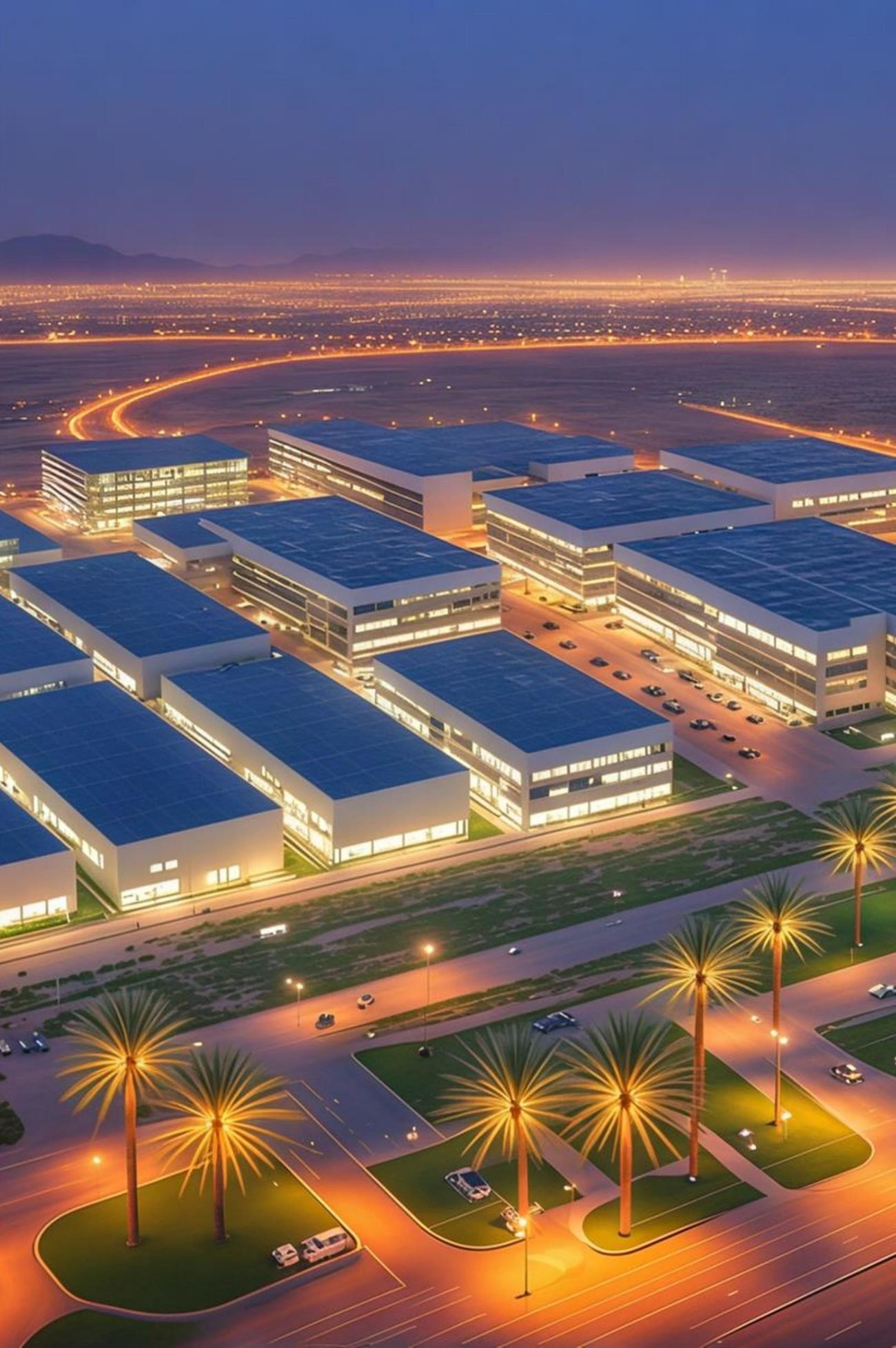
Al Ghail Industrial Zone
Ras Al Khaimah · United Arab Emirates
25°06′N 56°01′E
The proposition
One counterparty, land to start of production
Most industrial zones sell you a plot and leave you to assemble the rest. Erisha is master-developer-led: design, authority approvals, infrastructure and construction are coordinated through a single point of accountability.
Rana Exim FZ-LLC holds the land, builds the shell, brings the power and hands you a facility engineered around your process — not the other way around.
- Build-to-suit facilities co-designed around your production flow, automation and logistics
- Target 18 months from sublease execution to commissioning, subject to final design and approvals
- Master Developer delivers shell, structure, base MEP and campus infrastructure; tenant fits out process and equipment
- Expansion plots reserved from day one, so capacity grows without relocation
- 100% foreign ownership and full capital repatriation inside the RAKEZ free zone
Purpose-built clusters
Five clusters, one campus
Erisha is zoned around the industries that need each other. Suppliers, testing, training and services sit inside the same masterplan as the OEMs they serve.
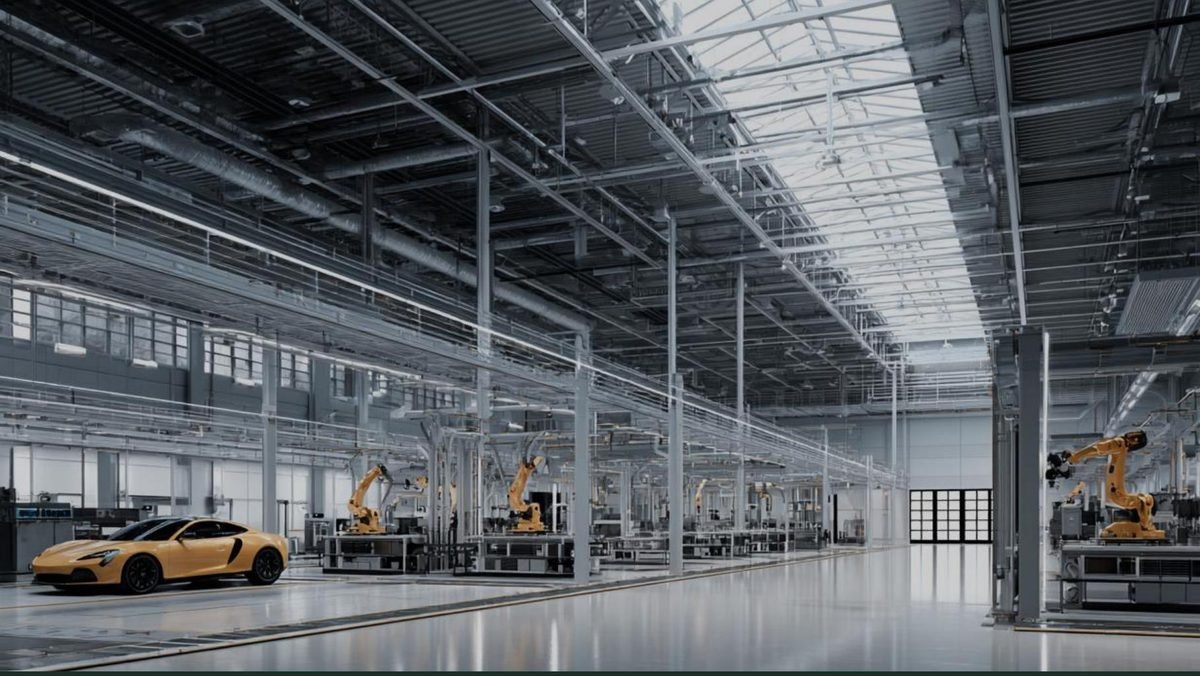 40 activities
Electric & hydrogen vehicles
Final assembly, battery packs, e-drivetrains, fuel-cell stacks, charging hardware and end-of-line testing.
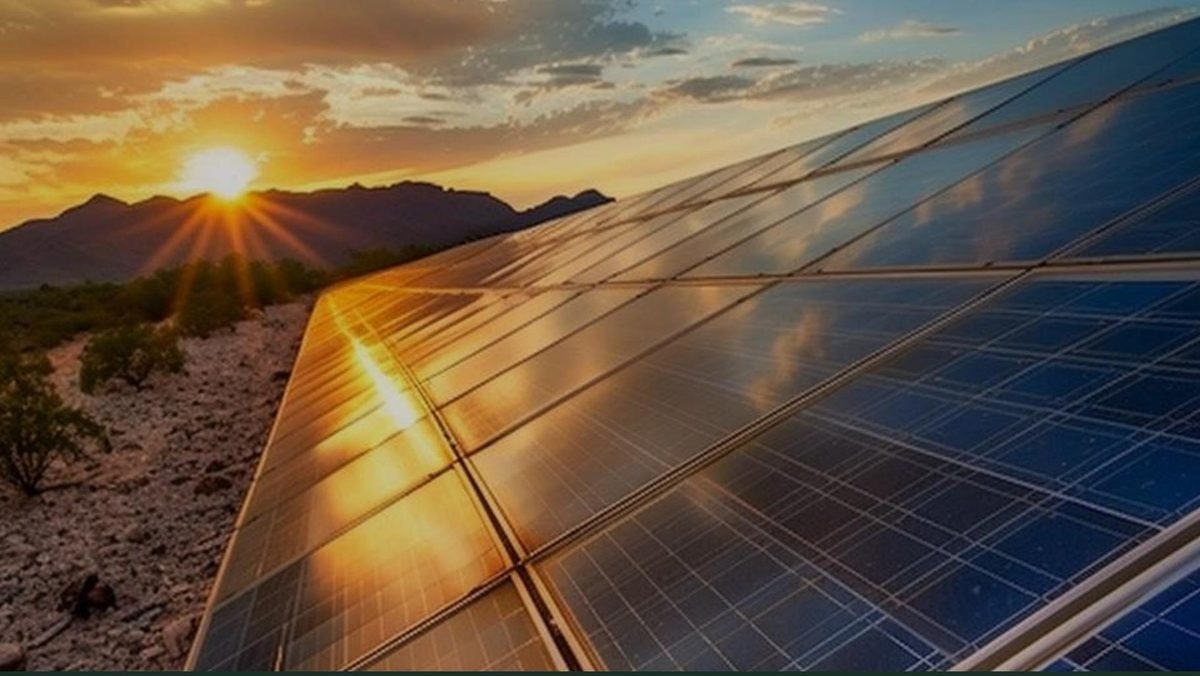 30 activities
Renewable energy & clean tech
Solar modules and cells, energy storage and BESS, inverters, electrolysers and grid equipment.
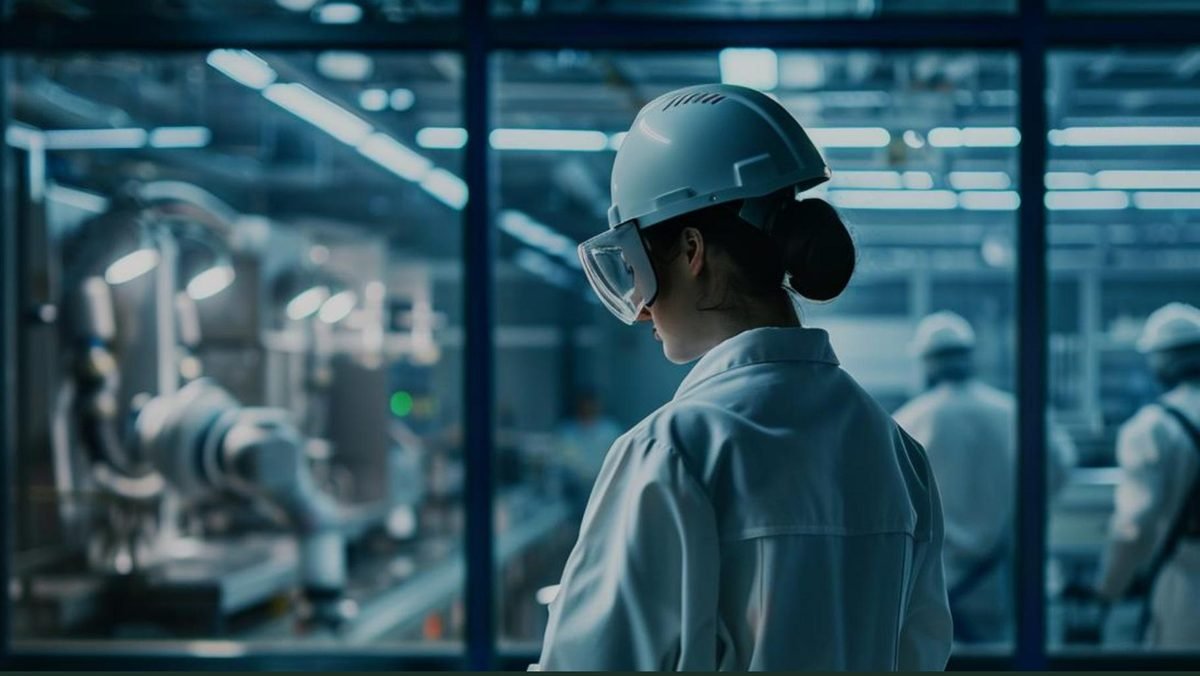 20 activities
Semiconductors & electronics
Power and compound semiconductors, OSAT and advanced packaging, PCB assembly, SiC and GaN devices.
 15 activities
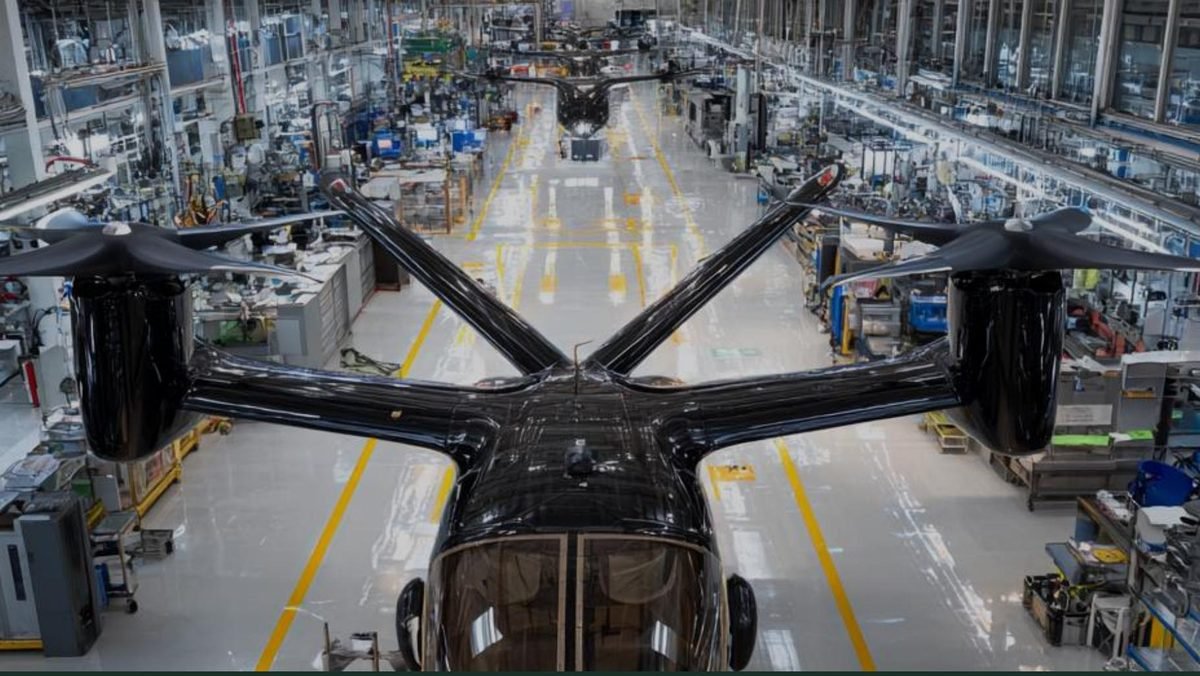
eVTOL & advanced air mobility
Airframes and composites, electric propulsion, avionics, aviation-grade battery systems and MRO.
 45 activities
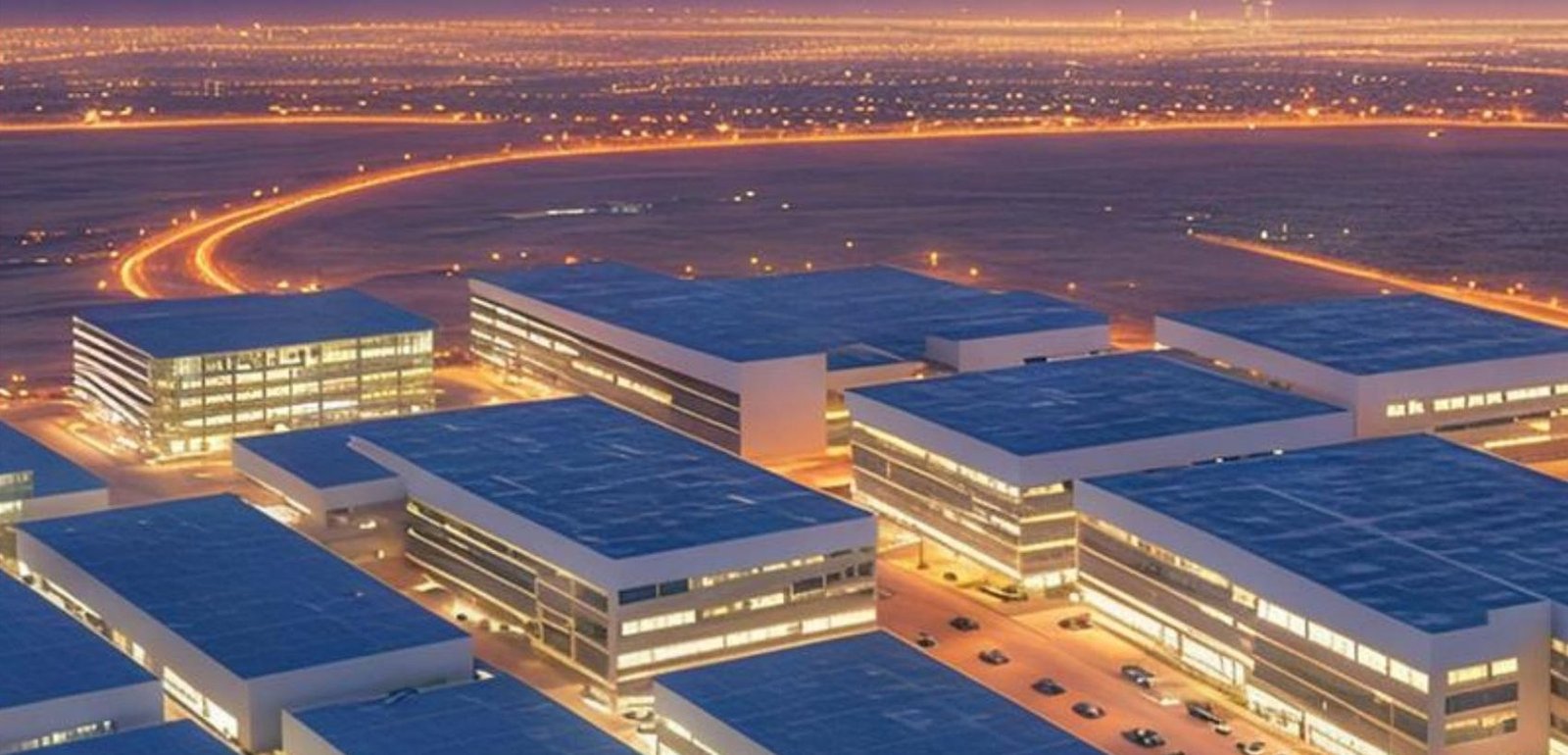
Supporting & ancillary industry
Precision machining, robotics, additive manufacturing, materials processing, metrology and logistics automation.
 50 businesses
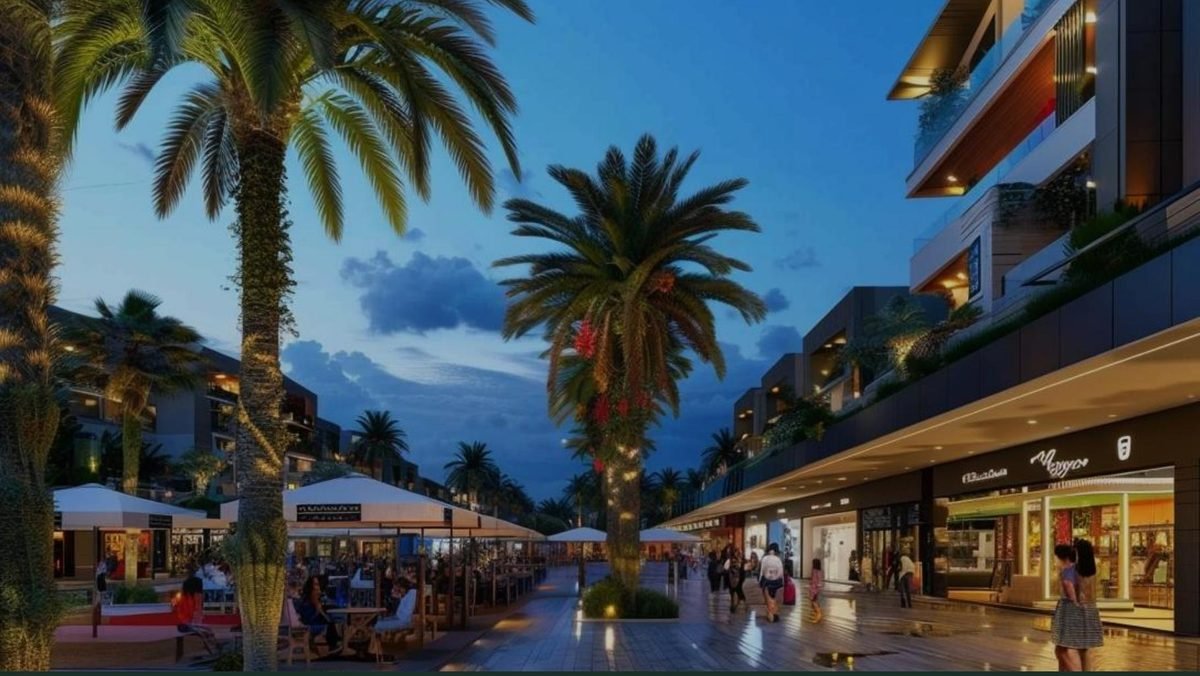
Living, retail & hospitality
Workforce housing, business hotels, retail and F&B, healthcare, education and recreation — leased to operators.
Allocation register
200 permitted activities.
Find yours.
Every activity Erisha is masterplanned to accommodate — 150 manufacturing lines across five industrial clusters and 50 ecosystem businesses across the residential, commercial, hospitality, healthcare, education, retail, recreation and R&D groups. Search it.
Register maintained by Rana Exim FZ-LLC. Activity approval remains subject to RAKEZ licensing and campus zoning.
Masterplan
Three phases, one continuous city
Select a phase to see what is delivered, when, and what it unlocks for tenants.
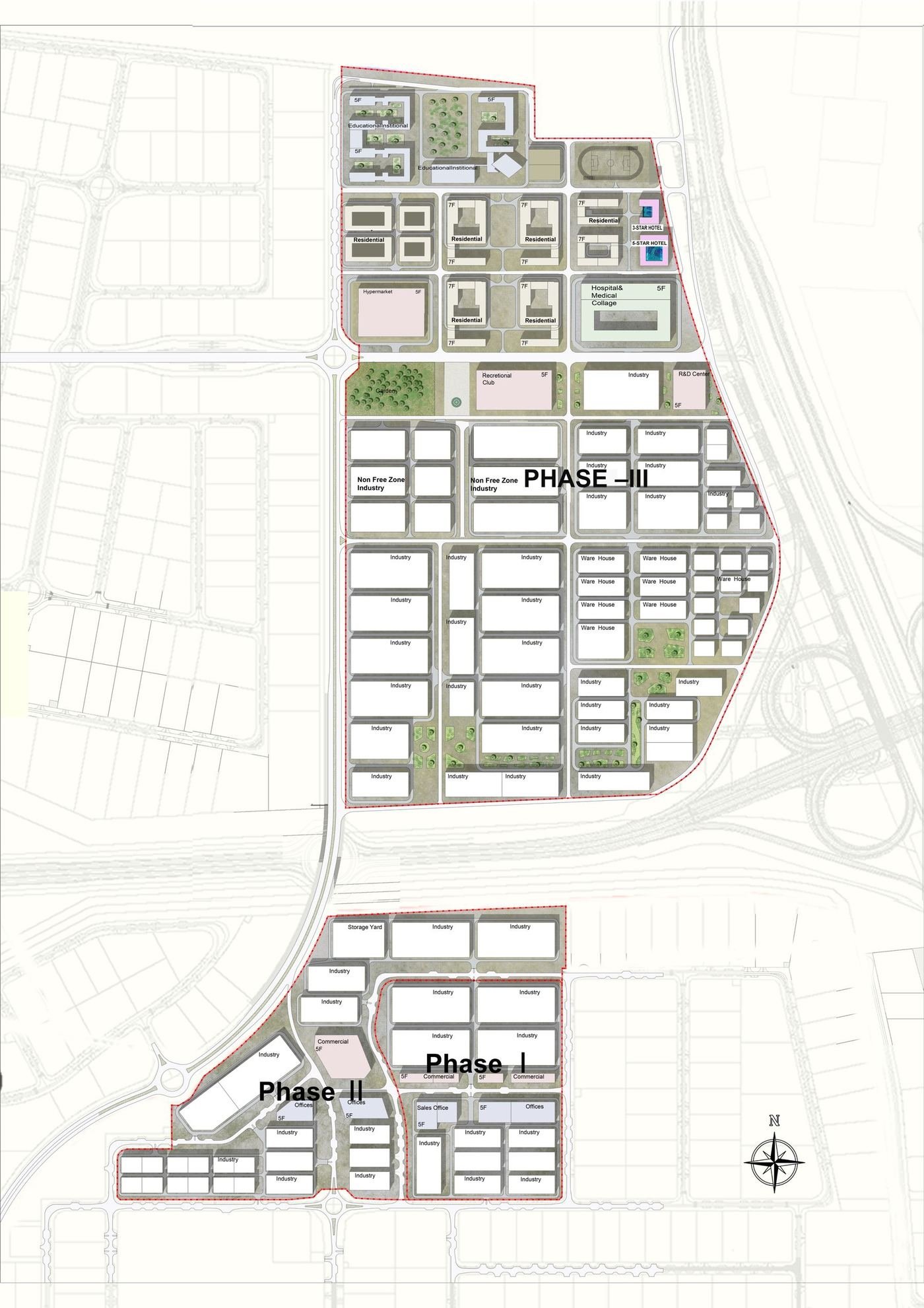
Masterplan drawing — Erisha Smart Manufacturing Hub, Al Ghail Industrial Zone, RAKEZ. Indicative and subject to authority approval.
Foundation & early revenue
- Core infrastructure — roads, utilities and digital backbone
- First 20 turnkey manufacturing units, pre-aligned to EV, logistics and renewable sectors
- Forerunner facilities along the main road arteries
- First lifestyle and residential blocks for workforce integration
Scale-up & high-tech anchors
- Semiconductor cleanrooms commissioned
- EV battery gigafactory commissioned
- Mixed-use support zone with retail and commercial development
- Schools, healthcare and AI-enabled smart logistics integrated
Full build-out & future technology
- Hydrogen vehicle manufacturing and eVTOL prototype testing zones
- Universities, R&D hubs, hospital and medical college
- Hotels, residential towers and the hypermarket
- Export scale-up aligned to UAE–India CEPA and African corridors
Why Erisha
The value proposition
35–50% lower operating cost
Structurally below Dubai and Abu Dhabi industrial zones on rent and land, protecting long-term competitiveness rather than offering a launch discount.
Free zone certainty
100% foreign ownership, zero corporate tax on qualifying free zone income, full profit repatriation and 48-hour expedited licensing through RAKEZ.
Aligned to national strategy
Directly supports UAE Operation 300bn, the Net Zero 2050 Vision and the UAE–India CEPA trade corridor.
15 minutes to Saqr Port
The Middle East’s largest bulk handling port, with RAK International Airport 20 minutes away and a planned Etihad Rail connection.
Net Zero from day one
Every building delivered to Net Zero standards, with a renewable-ready grid, greywater recycling and carbon credit generation built into the masterplan.
Phased, de-risked delivery
Three sequenced phases so capital follows demand: Phase I validates the ecosystem before high-capex clusters are committed.
Location
Plugged into the UAE’s trade infrastructure
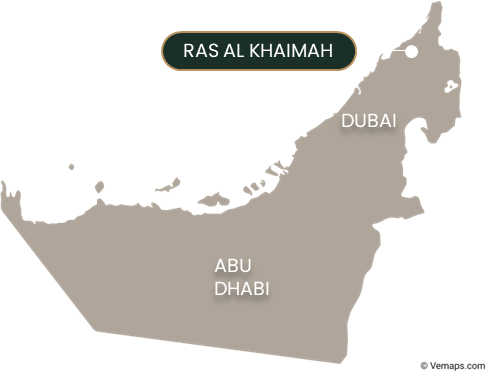
By road
- 5 min — E18 Highway
- 25 min — RAK City Centre
- 60 min — Dubai via E611
By port
- 15 min — Saqr Port
- 25 min — RAK Port
- 90 min — Jebel Ali Port
By air
- 20 min — RAK International
- 70 min — Dubai International
- 90 min — Abu Dhabi International
By rail (planned)
- Direct Etihad Rail connection
- UAE national freight network
- GCC freight corridor access
Across every region we operate in, our purpose remains constant: to build industries that are cleaner, smarter and more resilient. We are inviting investors, partners and industry leaders worldwide to participate in the industries of tomorrow — today.
Next step
Phase I pre-leasing is open
We are shortlisting anchor manufacturers, operators and co-investors for the first 20 turnkey units and the mixed-use assets that support them.
Occupier
Build-to-suit lease, 15–30 years
Operator
Hotel, retail, healthcare, education
Capital
Asset JV or anchor-led co-investment
Tell us which one you are and we will send the matching pack — facility brief, indicative terms or the investment memorandum.
Start an enquiry →