
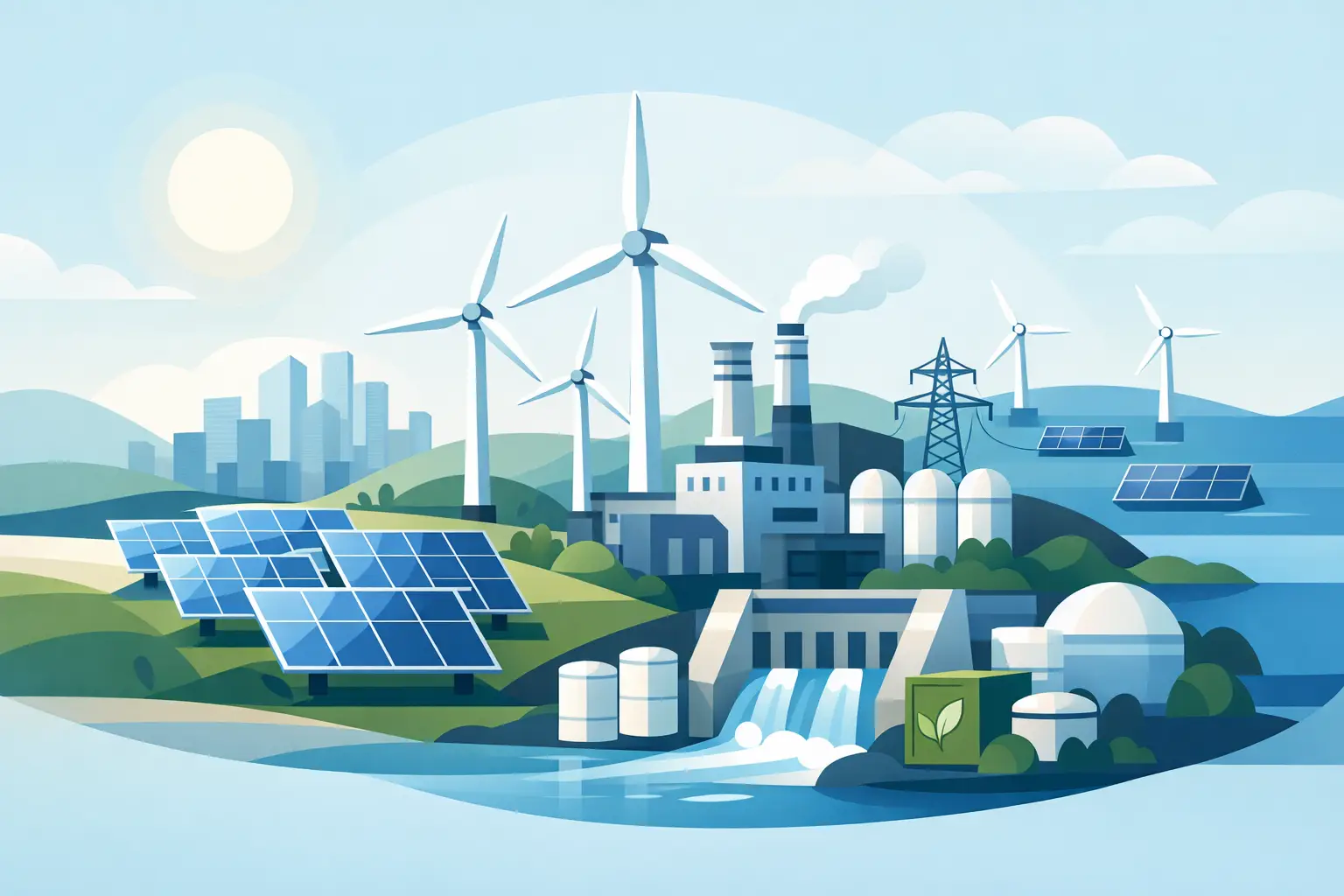
Industrial leaders are no longer asking whether clean energy manufacturing will scale. The real question is where that scale can happen fastest, with the lowest friction and the highest strategic upside. That is why top renewable energy industrial clusters have moved to the center of expansion planning for manufacturers, investors, and technology partners.
For decision-makers evaluating new production bases, the cluster model offers something a standalone industrial site cannot. It compresses time to market, improves supply chain coordination, reduces infrastructure duplication, and creates the conditions for long-term competitiveness. In renewable energy, where capital intensity is high and technology cycles are tightening, those advantages are not incremental. They are decisive.
Why top renewable energy industrial clusters matter now
Renewable energy manufacturing is entering a more demanding phase. Early growth favored policy support and market enthusiasm. The current phase favors industrial discipline. Companies now need access to specialized utilities, test environments, logistics corridors, export infrastructure, workforce depth, and regulatory clarity – all in one operating environment.
This is where industrial clusters outperform fragmented setups. A solar manufacturer located near glass processors, aluminum fabricators, power electronics suppliers, and logistics operators operates on a different economic footing than one building each link from scratch. The same is true for wind components, battery systems, hydrogen equipment, grid technologies, and energy storage platforms.
The most effective clusters also do more than group factories together. They align infrastructure, policy, talent pipelines, and adjacent sectors. That alignment matters because renewable energy manufacturing rarely stands alone. It intersects with semiconductors, advanced materials, mobility systems, automation, and precision engineering. The stronger the industrial adjacency, the stronger the cluster.
What separates leading renewable energy clusters from ordinary industrial parks
Not every site branded as a clean-tech destination qualifies as a true industrial cluster. Investors and occupiers should be more demanding.
A leading cluster starts with sector-specific infrastructure. Renewable energy production often requires heavy power availability, cleanroom-capable or precision manufacturing environments, specialized storage, hazardous material controls, and strong outbound logistics. If the underlying platform is generic, companies absorb the cost of customization themselves.
The next differentiator is ecosystem density. A cluster becomes more valuable as upstream suppliers, downstream assemblers, testing partners, logistics operators, and research institutions co-locate. This lowers lead times and improves resilience, especially when global supply chains are volatile.
There is also a workforce dimension. The best clusters are not labor pools alone. They are talent ecosystems supported by housing, education, healthcare, mobility, and quality-of-life assets that help employers recruit and retain technical teams. For advanced manufacturing, retention is an operational issue, not a human resources footnote.
Finally, the strongest clusters are positioned within clear trade and policy frameworks. Export access, customs efficiency, investor-friendly regulation, and ESG alignment can materially change project economics. A site may offer low land cost, but if compliance, shipping, or permitting create delays, the savings disappear quickly.
The core sectors inside top renewable energy industrial clusters
The phrase renewable energy can sound broad to the point of losing its industrial meaning. In practice, the most investable clusters are built around specific manufacturing verticals.
Solar remains one of the clearest examples. High-performing clusters support module assembly, inverters, mounting systems, glass, junction boxes, cables, and power electronics. The economics improve when these capabilities are co-located rather than imported through long and fragile supply chains.
Wind manufacturing typically requires large-format transport access, port connectivity, metal fabrication depth, and specialized component handling. This makes coastal and export-oriented industrial locations particularly relevant.
Hydrogen is increasingly part of the same conversation, especially where electrolyzer manufacturing, storage systems, mobility applications, and renewable power generation can develop in parallel. Battery and energy storage technologies also belong in this cluster logic, given their role in balancing intermittent generation and supporting grid modernization.
An important trade-off is that not every cluster should try to host every clean-tech segment. Overextension weakens execution. The strongest industrial platforms choose sectors with natural adjacency and build depth rather than broad but shallow positioning.
Geography still shapes competitiveness
Industrial strategy remains intensely geographic. Renewable energy manufacturers are not selecting locations based on narrative alone. They are selecting for cost, proximity, infrastructure, and market reach.
Europe offers mature policy frameworks and a strong sustainability agenda, but cost pressures can be significant. North America provides scale and incentive momentum, though labor and permitting complexity can vary by state and project type. Parts of Asia remain dominant in manufacturing depth and supplier integration, yet geopolitical concentration risk is now part of every board-level discussion.
This is where the Gulf is gaining strategic weight. The region sits between major demand centers, offers strong port and aviation links, and is increasingly aligning industrial development with national diversification and net-zero agendas. For companies serving GCC, African, Asian, and European markets, the Middle East is not simply a sales region. It is becoming a production platform.
That shift matters because location strategy is no longer just about where demand exists today. It is about where future supply chains can be built with fewer structural bottlenecks.
Why the Middle East is emerging in top renewable energy industrial clusters
The Middle East now presents a serious case for next-generation clean manufacturing. The proposition is practical. Lower operating costs, available industrial land, export connectivity, and policy-backed economic transformation create a strong base for long-horizon capital deployment.
For renewable energy manufacturers, this creates several advantages. First, the region can support large-format industrial development at a scale that is increasingly difficult in congested markets. Second, proximity to ports and trade lanes improves inbound raw material flow and outbound product distribution. Third, governments across the region are actively investing in industrial capability, energy transition, and strategic sectors.
The UAE is especially notable because it combines business-friendly regulation with advanced logistics and a clear commitment to future industries. That combination matters to multinational operators weighing not only project launch economics but also the durability of the operating environment over ten to twenty years.
A final advantage is cross-sector integration. Renewable energy manufacturing in the Gulf can sit close to mobility, electronics, advanced materials, and infrastructure programs that create domestic and regional demand pull. That makes scaling easier than in locations where clean-tech manufacturing is treated as an isolated niche.
Building a cluster that actually works
A credible cluster is planned backward from industrial requirements, not forward from marketing language. That means developers and ecosystem architects need to think beyond plot sales or warehouse inventory.
The first requirement is infrastructure readiness. Manufacturers need facilities that match technical specifications from day one, whether that means modular industrial units, turnkey factories, high-capacity utilities, or precision-ready environments. Delays in facility adaptation can compromise launch schedules and capital efficiency.
The second requirement is integrated land use. Industrial production performs better when employees and operators can access housing, healthcare, education, retail, and daily services within a connected environment. This is especially relevant in sectors where specialized talent is mobile and employers are competing globally.
The third requirement is sector curation. A cluster should not simply accept any tenant with an industrial license. It should intentionally assemble complementary sectors that create commercial and operational pull for one another.
This is the logic behind ecosystem-led projects such as Rana Group’s approach at the Erisha Smart Manufacturing Hub in Ras Al Khaimah, where renewable energy sits alongside EVs, hydrogen mobility, semiconductors, logistics, and innovation assets within a single ESG-aligned platform. For industrial occupiers, that kind of planning is not cosmetic. It directly affects production efficiency, partnership potential, and workforce stability.
What investors and occupiers should evaluate first
When assessing top renewable energy industrial clusters, companies should look beyond incentives and land pricing. The more important question is whether the environment lowers execution risk.
That starts with utility reliability, facility suitability, and logistics performance. It extends to customs processes, permitting timelines, workforce accessibility, and adjacency to suppliers and customers. It also includes softer but equally material factors such as whether the surrounding ecosystem can support senior technical talent and long-term operational continuity.
There is no universal formula. A company manufacturing solar components for regional export may prioritize port access and cost structure. A hydrogen technology company may care more about industrial power, testing environments, and mobility sector adjacency. A battery manufacturer may place greater weight on safety systems, specialist labor, and regulatory consistency. The right cluster depends on the production model.
What does not change is the direction of travel. Clean energy manufacturing is moving toward integrated, specialized, investment-grade ecosystems. The winners will be locations that can offer scale with discipline, ambition with execution, and infrastructure that matches the complexity of the industries they want to attract.
For leaders planning the next phase of industrial growth, the right cluster is not just a place to operate. It is a platform for shaping market position while the future of energy manufacturing is still being built.
