
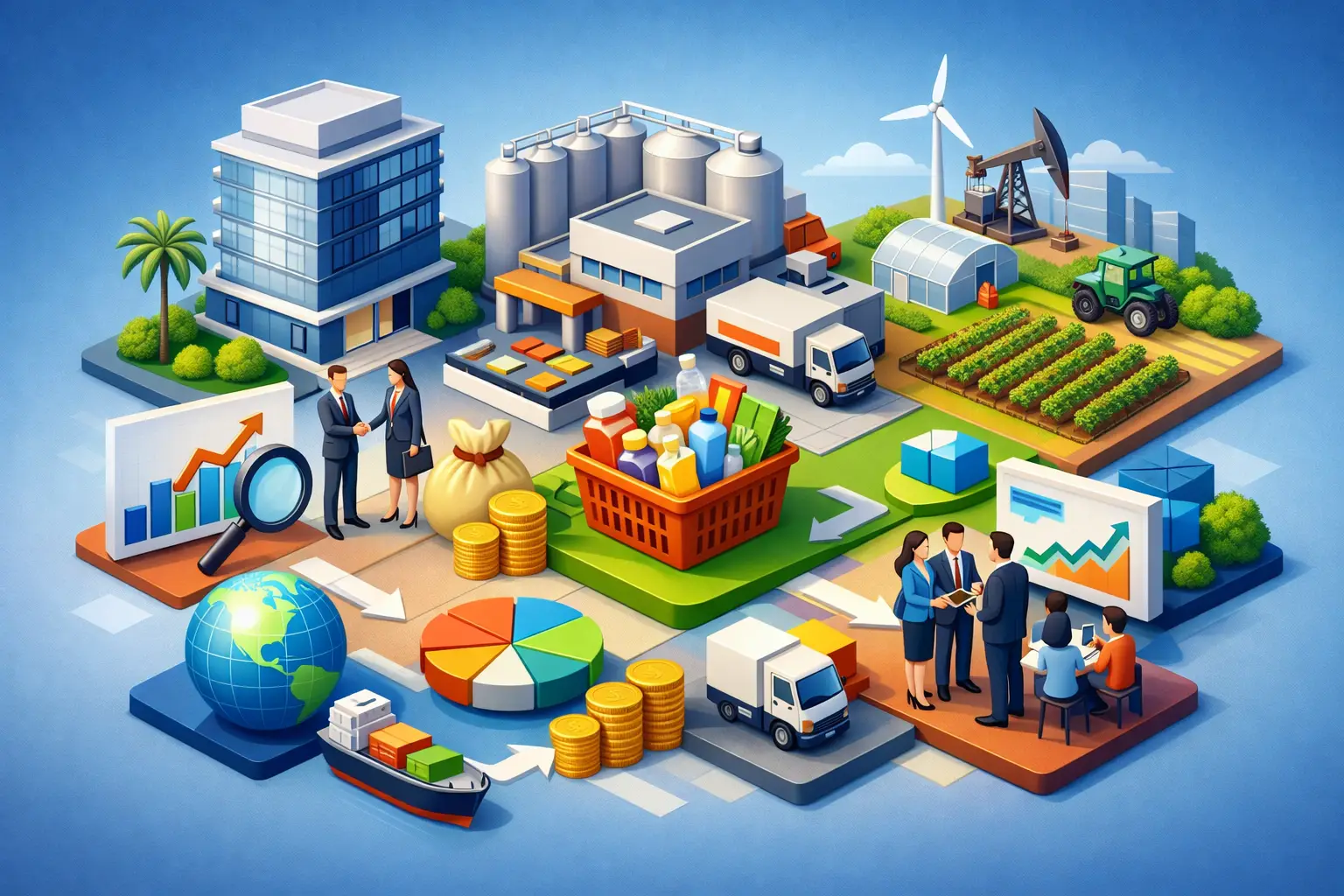
Most industrial projects compete on land, utilities, or tax efficiency. Rana Group is building on a different premise: industrial growth becomes more durable when manufacturing, logistics, talent, housing, healthcare, education, and innovation are planned as one system. If your starting point is, “I want to know more about whole Rana Group business model,” the answer is not a standard real estate story. It is an ecosystem model designed to reduce friction for advanced industry and create long-term value across multiple layers of infrastructure.
This matters because manufacturers and investors are no longer choosing locations based on a single variable. They are evaluating speed to market, workforce stability, ESG alignment, access to logistics, room for backward integration, and the ability to scale without relocating every few years. Rana Group’s model is built around that reality.
What Rana Group is really selling
At the surface level, Rana Group develops industrial infrastructure. But the business model goes further than leasing factory space or marketing industrial plots. The core offer is a master-planned operating environment for sectors that need more than conventional warehousing or generic industrial parks can provide.
That means purpose-built infrastructure for advanced manufacturing tenants, including turnkey factories, modular industrial units, logistics facilities, and cleanroom-ready spaces for semiconductor-linked activity. It also means sector-defined clusters for electric vehicles, hydrogen mobility, eVTOL aircraft, renewable energy production, and adjacent technologies where supply chains, compliance needs, and technical requirements are more demanding.
The distinction is critical. A standard developer monetizes land and buildings. Rana Group is positioning itself as an architect of industrial ecosystems where occupiers can operate, attract talent, collaborate, and scale inside one coordinated environment. That changes both the revenue logic and the strategic relevance of the platform.
The Rana Group business model in plain terms
The Rana Group business model is anchored in attracting four groups into one integrated platform: industrial tenants, strategic investors, innovation partners, and institutional collaborators. Each group strengthens the value proposition for the others.
Industrial tenants bring recurring occupancy, production activity, and ecosystem credibility. Strategic investors support capital formation and long-range expansion. Innovation partners, including R&D and technology collaborators, raise the sophistication of the platform and help future-proof it. Institutional stakeholders, from public-sector and ecosystem entities to education and workforce partners, help create stability and operating depth.
This is why the model should be understood as a network business built on physical infrastructure. The real asset is not only the square footage. It is the interdependence between industrial operations, workforce support systems, logistics capacity, and sector clustering.
That interdependence creates a stronger moat than a standalone industrial site. If a tenant can produce, recruit, house staff, access services, connect to ports, and collaborate with neighboring industries inside one ESG-compliant environment, switching costs rise and long-term retention improves.
How the model creates revenue
Revenue likely comes from multiple infrastructure-led channels rather than a single stream. The first is industrial occupancy – leasing or monetizing turnkey factories, modular units, specialized spaces, and logistics assets. The second is value capture from mixed-use components that support the industrial base, including residential, retail, hospitality, healthcare, and education-linked assets.
The third layer is strategic ecosystem monetization. In a platform built for advanced sectors, value is also created through long-term partnerships, co-development structures, phased expansion, and cluster-specific infrastructure designed around high-growth industries. In practical terms, a hub prepared for EV assembly, hydrogen-related manufacturing, or aerospace-adjacent production can command more strategic interest than undifferentiated industrial inventory.
There is also a portfolio logic at work. When industrial development is tied to community infrastructure and innovation assets, the result is a more resilient model than one dependent on land sales alone. It allows value to be created over time through occupancy, expansion, service demand, ecosystem stickiness, and institutional relevance.
That is one reason the company’s light-asset thinking matters in understanding the bigger model. If you want a closer look at that approach, Why Erisha Created a Light Asset Model adds useful context.
Why Erisha is central to the whole model
Rana Group’s industrial strategy is centered on the Erisha Smart Manufacturing Hub, which functions as the operating heart of the business model. Erisha is not framed as a conventional industrial zone. It is positioned as a mixed-use industrial ecosystem where manufacturing and daily life are intentionally integrated.
That integration is not cosmetic. For industrial occupiers, workforce friction is often one of the hidden costs of expansion. If teams struggle with housing access, healthcare, schooling, retail convenience, or quality-of-life factors, retention weakens and operating costs rise in indirect ways. Rana Group addresses that problem by embedding these elements into the broader development logic.
This gives the model a competitive edge with sectors that need stable technical talent and long planning horizons. Advanced manufacturing does not perform best in fragmented environments. It performs best where operations, supply chains, talent systems, and community infrastructure work together.
For investors, that creates a more defensible proposition. For tenants, it reduces ecosystem risk. For strategic partners, it provides a platform with clearer long-term relevance.
Sector specialization is a business strategy, not a branding exercise
One of the strongest features of the Rana Group model is that it is not trying to be everything to everyone. It is targeting industries with structural tailwinds, policy relevance, and growing infrastructure needs.
Electric vehicles, hydrogen mobility, semiconductors, renewable energy, and eVTOL-related manufacturing are not random categories. They sit at the intersection of industrial policy, energy transition, supply chain realignment, and next-generation mobility. By preparing infrastructure around these sectors, Rana Group is aligning itself with where capital and manufacturing demand are moving.
That matters because specialized sectors require specialized readiness. A cleanroom-ready facility has a different operational profile from a standard unit. Hydrogen-linked production may require infrastructure and adjacency planning that generic parks cannot support. Aerospace-adjacent manufacturing has precision, certification, and logistics demands that raise the importance of ecosystem design.
This specialization also improves tenant mix quality. When related industries co-locate, collaboration becomes easier, supplier relationships tighten, and backward integration opportunities become more realistic. That is especially relevant in hydrogen and mobility sectors, as explored in Is Erisha Made for Green Hydrogen Backward Integration? and Is Erisha Right for EV and Hydrogen Production?.
The location strategy behind the model
A business model like this only works if location strengthens the economics. Rana Group’s positioning reflects that clearly. The appeal is built around lower operating costs, access to ports, investor-friendly regulations, and connectivity to GCC and international markets.
For an expansion leader or operations director, those are not secondary benefits. They directly affect landed cost, supply chain responsiveness, import-export efficiency, and the feasibility of regional manufacturing. A site can have excellent buildings and still fail if logistics complexity or regulatory friction undermines execution.
Rana Group’s model addresses location as an operating variable, not just a map point. That is a serious distinction for multinationals evaluating where to place capital-intensive manufacturing over a 10- to 20-year horizon.
Why the mixed-use layer is not a side business
Some industrial projects add hospitality, retail, or residential elements as a marketing feature. Here, those components serve the industrial engine. They support workforce attraction, executive mobility, partner hosting, daily convenience, and longer-term community formation.
That makes the mixed-use layer economically relevant, not decorative. In high-value manufacturing, the surrounding environment affects productivity and retention more than many site selectors initially assume. A true live-work-innovate model can improve operating continuity and strengthen tenant commitment over time.
This is also where the ecosystem gains institutional depth. Education and healthcare are not peripheral if your objective is to support industrial growth at scale. They become part of the long-term capacity of the platform. Why Education, Healthcare, Hospitality Matter explains that logic well.
ESG alignment strengthens the commercial case
Rana Group frames its environment as ESG-compliant, and that is commercially significant. ESG has moved well beyond investor presentation language. For many manufacturers, it now influences financing, procurement qualification, customer expectations, and internal expansion approvals.
An ESG-aligned industrial ecosystem can help tenants meet their own reporting and operational targets more efficiently. It can also improve attractiveness to international partners and institutions that increasingly screen for sustainability and governance considerations.
There is a trade-off here worth noting. ESG positioning only creates value if backed by real infrastructure decisions, planning standards, and measurable performance. In that sense, ESG should be read as part of the operating model, not a messaging layer. Is Erisha Smart Manufacturing Hub ESG and SDG Aligned? offers a deeper view of that alignment.
What makes this model different from a normal industrial developer
The simplest answer is that Rana Group is not trying to maximize short-term value from isolated industrial inventory. It is building a platform designed to compound value through ecosystem effects.
A normal developer can fill units. Rana Group’s model aims to create a destination for strategic industry. A normal industrial park can host tenants. This model is designed to retain them, connect them, and give them room to expand into adjacent capabilities over time.
That is why the business should be understood as infrastructure-led, investment-oriented, and future-defining. Its success depends not only on construction but on curating the right sectors, the right partners, and the right conditions for industrial growth.
For decision-makers evaluating whether the model is credible, the right question is not just, “What space is available?” It is, “Does this platform reduce the structural barriers to scaling advanced industry?” Rana Group’s answer is yes – by combining industrial readiness, sector specialization, mixed-use support, sustainability alignment, and strategic geography into one coordinated ecosystem.
That is the whole Rana Group business model in essence: not a collection of assets, but a system built for where the future works.
